
My Tribute to Paul Timothy Anderson February 20, 1957 – December 28, 2019

I don’t remember when Paul and I first met. Our parents had been friends for years, so it was as if he had always been there. Paul’s dad would tease us that we’d been playing together since we were in diapers. Neither Paul nor I remembers those days. However, I can picture little Paul and little Diane playing in a sandbox with droopy cloth diapers.

We grew up in different towns, so we mostly saw each other every summer at youth camp and then again at family camp, both held at Indian Lake Nazarene Camp in Vicksburg, Michigan. Besides those events, there were other times we’d get together, like weddings and funerals, visiting missionaries, traveling gospel singing teams, and other special speakers for which the Nazarene community at large would gather regularly.

Even without seeing each other for months, Paul and I were like magnets at these events. It took no time for us to find each other and reconnect. It was just one of those expected things. No one said anything about it. It was just understood.

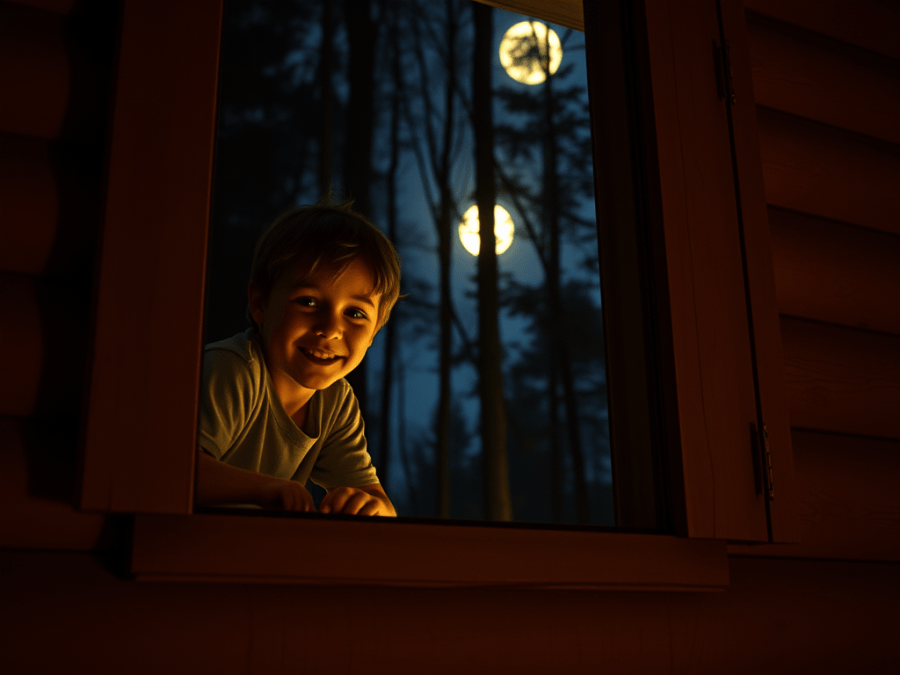
Paul was an adventurous boy who was always looking to have fun. At youth camp one summer, he sneaked up to my cabin window after lights out and convinced me and my cabin mates to crawl out of the window and join him and his cabin mates in a game of hide and seek in the moonlit woods. It was the best night ever!

One I will always remember as being exciting, spooky, and just a little bit naughty. We didn’t do anything wrong, but there’s something exhilarating about being where you’re not supposed to be when you’re not supposed to be there. That was Paul’s MO. Always pushing the limits. Not a bad boy, but a good boy who pushed the limits.

The fun ended when we were caught, hauled into the camp director’s office, and reprimanded. I didn’t like getting in trouble, so I tried avoiding Paul and his antics for a while after that. This never worked for long since Paul Anderson was not a boy who could be ignored.

The summer of 1972 was the year I got to know Paul best. I was 14 years old, and Paul was 15. His dad had just accepted the pastorate at the New Lothrop Church of the Nazarene, my home church, and his mom had already been battling cancer for a few years and was not doing well. Things were rough, but the church gathered to support them, and the Anderson family quickly became part of our small community.

Paul’s love for life and people was contagious. He lived in the present and always wore a goofy grin.

His dad, however, didn’t always appreciate Paul’s happy-go-lucky attitude. Rev. Anderson would frequently chastise him for not taking things seriously enough. But Paul wasn’t blind to the harsh realities of life – he just chose to live above them.

Since Mrs. Anderson was too ill to manage two young girls, ages 7 and 3, my mom cared for Kendra and Karla during the day while Rev. Anderson worked at the church. My Aunt Maxine and Uncle Paul, who lived next door to us on our grandparents’ farm, opened their home to Paul whenever he needed a place to stay.

There was always something to do. Paul would help my Uncle Paul in his workshop. My uncle told Paul he had a good name, and Paul got a kick out of that.

Paul and I took full advantage of the acreage at our disposal. We would take long walks down to the woods or crawl up into the barn’s hayloft and talk for hours. We’d listen to our favorite songs on the radio and dream about all the wonderful adventures life had yet to unfold. Paul fit right into our family, and we soon became best friends.

I was quiet and shy, and he was outgoing and adventurous. Together, we made quite the pair. He gave me the courage to try new things, and I calmed him. We were good for each other and became inseparable at school and at home.

Once fall arrived and school began, we fell into a comfortable routine. My mom continued to care for Kendra and Karla during the day. With Kendra now in school, the bus would drop her off at our house while I would walk home with Paul to the parsonage in town.

Walking into the back door of the parsonage, we’d find Mrs. Anderson either resting on the family room couch or sitting at the kitchen table. Regardless of her position, she always welcomed us with a big smile. The pretty scarf around her head contrasted sharply with the dark rings surrounding her big brown eyes. But the sad, worn look disappeared when she smiled, showing how happy she was to see us. She was warm and inviting, and I loved being in her presence.

Paul and I would help with the never-ending household tasks such as laundry, washing dishes, and sweeping the floor. But with Paul, most tasks became a game, and we would either end up wet, making a mess, or both. Mrs. Anderson never complained. Our silly antics entertained her, bringing joy into her otherwise pain-filled life.

I had never witnessed death firsthand, so I didn’t see Mrs. Anderson as dying. I saw her as a sweet lady who was frail and needed our help. Paul, on the other hand, knew the full extent of her illness but chose to look past it. Therefore, those afternoons together were never somber. They were filled with life, love, and fun.

Making dinner on most nights consisted of tossing a frozen pizza or other cardboard-covered entree into the oven. Apparently, that’s all the cooking skills Paul and I had at the time.

After taking care of dinner, we would sit on the family room couch and tackle homework until Rev. Anderson came home. That’s when the merriment would conclude, and real life would again set in. My mom would soon drop off Kendra and Karla at the parsonage and take me home.

At first, Paul tried to make his Sophomore year in high school as normal as possible. He tried out for football and was the only Sophomore allowed on the Varsity team. He made up for his less-than-bulky frame with extra heart. Coach told him to tone it down and tackle smarter, or he would get hurt.

Paul learned fast and quickly found his place on the team. Until the day he regretfully had to drop out because his mom’s condition was worsening, and he was needed at home. That broke his heart. He never even got to play in their first game.

As the year progressed and winter began, Mrs. Anderson was in and out of the hospital. During those weekends, Paul would stay with my aunt and uncle. We spent countless hours snowmobiling all over the farm with Uncle Paul, my dad, and my brother. One day, my Uncle Paul came home with the hood of an old car and hooked it up behind his snowmobile so we could ride on it. I can still see that hood, wildly, and probably dangerously, swinging from side to side as it was towed over the rough cornfields. We never wore helmets in those days. Never thought of it. Not even sure they existed. But somehow, we survived with only a few cuts and bruises, and enough memories to last a lifetime.

Paul and I would frequently seek out quiet places to sit and talk. We were comfortable in each other’s presence, finding a safe place to confide. Paul told me of his dream of becoming a surgeon. I told him he had the hands for it with his long, slender fingers. He’d laugh and say he had girly hands, but there was nothing feminine about them. They were capable hands, made to perform precise and delicate surgeries. And it felt really good when he wrapped those long fingers around mine.

I remember sitting in church together, about 6 inches between us, which was the acceptable space between a young man and a young woman. Our fingers were interlocked between our two bodies as we held hands. We thought we were sly, hiding it from his dad in the pulpit. Looking back, I’m sure Rev. Anderson knew what we were doing but never said anything about it.

I remember Paul telling me his dad had “the talk” with him about respecting young women. So, between his dad and my dad, I’m sure Paul was too afraid to get out of line. This was a good thing because sexual feelings didn’t sidetrack us. We found freedom in our innocence.

We could truly be ourselves and share ourselves without adding stuff kids our age shouldn’t have to deal with. We opened our hearts while mutual respect threaded its way throughout our interactions. This gave us the courage to experience the unknown together. And life was throwing more of the unknown at us every passing day.

Paul got his class ring and took it to the hospital to show his mom. She oohed and aahed over it as if it were the most beautiful piece of jewelry she had ever seen. Paul found out later that because of the tumors pressing up against the back of her eyes, she couldn’t see it at all.

Christmas and my 15th birthday came and went without hardly a notice. But I vividly remember the congregation gathering on a cold, snowy winter’s evening in the church sanctuary to hold a special prayer service for Mrs. Anderson. I can still hear the petitions and wails echoing from the tall ceiling as everyone beseeched God for his mercy and healing power. Most of us were crying, desperately trying to understand how such a lovely woman could be dying from such a horrendous disease and how such a beautiful family could be mercilessly torn apart.

But our prayers went unanswered, and in February 1973, Betty Anderson passed into eternity.

That day changed everything.

My parents would not allow me to attend her funeral in their desperate attempt to protect my tender heart. But my dear friends were grieving, and I was not there to comfort them. I will always regret that.

It was during this time that Paul broke up with me. He told me his dad told him he needed to focus on his family instead of a girlfriend. They were moving, and he couldn’t sustain a long-distance relationship. I was confused because I always got the impression Rev. Anderson liked me. So, to find out he insisted Paul break up with me, hurt. And I spent the next forty-five years resentful.

Not able to face all the heartache and memories New Lothrop held, Rev. Anderson indeed packed up the family and moved away shortly after Easter that spring. I never heard from them again.

Looking back, I’m sure my parents knew where they had gone. But in an attempt to help my broken heart heal, they withheld the information from me, thinking I could get over it better if I were not reminded of what I had lost. I appreciate their attempts to protect me, but this made the loss all the greater, for, from my perspective, the Anderson family had fallen off the edge of the earth, never to be seen or heard from again. My parents stole from me what little comfort I could have found in knowing where my friends were and how they were doing.

These events changed my whole family. My parents left the Nazarene church, stopped attending camp and other Nazarene events, and started attending a Baptist church in the next town. My world literally turned upside down as I lost everything. As a result, my identity suffered in a way I think few could comprehend, sending me into a spiral of bad choices in an attempt to fill the ugly void that consumed me. We were each reeling from our loss, desperately trying to regain footing in the foreign world we found ourselves in. But we should have been able to do that together, not all alone, each on a separate desperate journey.

Forty-five years later, after hearing my story, my best friend Pam embarked on a one-woman quest to find Paul and his sisters. She succeeded in a remarkably short period of time. Pam found Karla on Facebook and private-messaged her. Things snowballed from there. Karla contacted me, as did April, Kendra, and Paul. One by one, we reconnected.

Paul’s first words to me during our first phone call were, “Hey, you, it’s been a long time!” His voice was gravellier than before, but it was still the same voice—the same boy.

My newfound relationships with Paul, April, Karla, and Kendra continued for almost two years. Except for Kendra, the girls and I even got together for dinner at my house. That reunion was surreal. Karla, who had been 3 years old the last time I saw her, was now a 47-year-old mother. When I saw her last, Kendra, a 7-year-old, was now a 52-year-old mother and grandmother.

April, Paul’s daughter, took my breath away. She was a vision of loveliness with so many of her dad’s features. I couldn’t help but stare and grieve at the same time: stare at her beauty, but grieve for her father, who was not there. And then there was precious little Kylah, who was her grandpa’s pride and joy and, without a doubt, embodied her grandpa’s vivacious spirit.

All was perfect that night, except for Paul’s absence. He could not make it up from Florida, although his heart swelled with pride that his girls and I, after so many years, had finally found each other.

During those two years, conversations between Paul and me took off exactly where they had left off forty-five years previously. Of course, there was much catching up to do—marriages, children, careers, divorces, experiences, lessons learned, regrets … but they soon settled down to connections of the heart. We had an openness and honesty with each other, which is rare. It was built on history, trust, and respect.

In one conversation, when I shared how I thought he could handle a situation better, Paul said, “You know I’m smiling from ear to ear. Even when you get after me, you make me smile.”

In another conversation, I said I was fine when Paul asked how I was. He said, “No, you’re not. I can hear it in your voice. Tell me what’s wrong.” I then broke down crying and told him my daughter-in-law had just been diagnosed with breast cancer. The best of Paul came out, and he engulfed me in tender-hearted compassion. I almost felt his hug over the phone. He listened, and he cared. And that’s all I needed at that moment.

We both smiled a lot during that time. We were confidants and true friends in the deepest sense. We confided, vented, cried, encouraged, and laughed—and confessed.

Paul confessed that his dad never told him to break up with me. Paul decided to end things because, in his words, “It hurt too much to love and lose, so I thought it would be better not to love at all.” I immediately repented of holding a grudge against his dad all those years. And, as much as I wanted to understand why Paul did what he did, I couldn’t agree with him. I would much rather love and lose than never love at all.

He also confessed that instead of dropping off the face of the earth as I had imagined, they had merely moved an hour away to St. Johns, Michigan, where his dad had accepted the pastorate. I couldn’t believe it. All those years and only an hour away! Yet, he never contacted me. He let me die along with his mother.

Paul had other regrets. He regretted choosing a self-destructive path while living in St. Johns after his mother died. He regretted letting his dream of being a surgeon die with her. He regretted not raising his children in the church. And he regretted not being there for them when they needed him most.

But over the past two years, I’ve seen Paul’s faith renewed. I’ve seen him accept God’s forgiveness and come to the point where he could forgive himself.

He renewed his interest in making his life count. Despite challenging circumstances, he found a way to reclaim his old passion for helping people.

Even though becoming a surgeon was no longer an option, he made his mark by encouraging fellow patients in his oncologist’s office. He was the guy at Walmart who would make fussy kids laugh, bringing a look of gratitude to tired mothers’ faces. He was the best of Paul, once again, full of compassion and empathy, giving people hope.

Paul loved life and people. He told me more than once, “I’m not afraid to die. I just really want to live.”

Paul desperately wanted to move back to Michigan to be close to his daughter, granddaughter, and sisters. But that never happened. The external forces that bound him proved stronger than his internal desire for change, and I didn’t understand that. I thought it was within his power to make it happen if he had wanted it badly enough. But I don’t have the right to judge. He had stage 4 cancer, and it drained the life out of him.

At that point, his strength was more depleted than he let on during our phone conversations. He seemed so alive during those calls that I thought he could make anything happen. But, looking back, I think I was wrong. Circumstances had weakened him to the point that he had little fight left other than what he could temporarily summon when talking to those he loved. What hurts the most is seeing a vibrant boy with so much promise dissolve into a sick old man who figured life out too late.

Paul and I were never able to share that big hug we promised each other. But we did spend countless hours on the phone, connecting on a level deeper than physical touch ever could.

I have a hard time believing Paul is gone. His number is still in my phone contact list, and I half expect to see his name light up on my screen at any moment. But his name is silent.

I will always miss Paul. He is a part of me. I will always treasure the moments we shared together. But we served the same God and shared the same faith, so I know I will see him again.

I never got to say goodbye to Paul. He was in such high spirits during our last phone conversation, due to April and Kendra’s visit, that goodbye didn’t seem appropriate.

His last words to me were, “I’ll call you tomorrow night.”

My last words to him were, “I’d like that.”

I can imagine the next time Paul and I see each other. He’ll say something goofy like, “Tomorrow night took a long time, but here I am!”

When I think of Paul, I smile. That’s who Paul was. That’s what Paul did. Paul made you smile.

I Can Relate to Mrs. Lot

Lot’s wife has taken a lot of criticism over the years. You know, for daring to look back as she and her husband were fleeing Sodom and Gomorrah as it was being destroyed.

But, I can relate to this woman. I’m sure she had a good reason for looking back. She probably just finished remodeling her kitchen. The one she had been nagging Lot about for the past 20 years. After all that time he recently conceded and she finally got the kitchen of her dreams. And now he says they have to go? Is he crazy? After all she went through to get this lovely new kitchen?

Did he even have the faintest idea what an ordeal this remodel was? First on the list involved finding a structural engineer who would make sure the current foundation could support the massive island she envisioned. Then locating a qualified contractor, one with good references who actually completed projects on budget and on time. That was just the beginning. Then came hours of reviewing popular kitchen layouts and don’t forget, flooring options. Should she go with tried and true ceramic tile? Or, with less expensive porcelain tile? Maybe brick or natural stone? Solid wood or engineered hardwood or laminate or fairly new on the scene but more affordable, Luxury Vinyl Plank?

Then onto choosing the paint. Do you know how many variations of white there are? How is one to decide? Hundreds of shades of neutrals just about did her in. Lot, too. He had wanted nothing to do with choosing paint colors. Just like a man. Leave all the important decisions to her. When she was already overloaded with options! But, one by one she made her choices. And despite months of living in the chaotic mess of construction, the project was finally completed. The result was astonishing. She was beyond happy! And now she’s supposed to simply walk away?

Sure, the neighbor’s lifestyle was questionable. All the more reason to make their home a sanctuary. A safe place from all the violence and debauchery of the city. But, not to leave it!

Yeah, I get this woman. I apologize for butchering the biblical account as told in Genesis but please hear me out. Many things could have prompted Lot’s wife to turn around as they were fleeing the wickedness of the city. But I have to believe, as a woman, there had to be something there that she thought she would miss. Something that would be hard to let go of. Something that she perhaps thought she couldn’t live without. The fact that she was turned into a pillar of salt convinces me that something she was leaving behind must have owned her heart.

I live in a 130-year-old Victorian Farmhouse in need of restoration from the original stone foundation to the metal sheeted gable ends. And I struggle with being financially responsible with my resources. Which isn’t much. Where should I put my money? In material things that will bring temporal happiness or in loftier pursuits such as investing in God’s kingdom?

Big decisions, hard choices. Right now my money is going into making the house safe and functional which, unfortunately, does not include anything cosmetic. So, for now anyway, I’m stuck with 1960’s paneled walls, mobile home drop ceilings, and cracked vinyl peal ‘n stick squares on the floor.

Just like Mrs. Lot, I have big dreams. When I close my eyes, I vividly envision my dream home in all its splendid glory!

But, what if I had to leave it? Would it tear me apart? Would I grieve it like a lost lover? Would my purpose for living cease to exist?

Questions such as these bring us to the core of our existence. Why are we here and what really matters? At the end of my life, what will I look back on? Will I be proud of my decisions or will I have regrets? Probably a mixture of both.

I recently attended two memorial services only seven weeks apart. A husband and wife who had shared married life for 65 years. What struck me was all the accolades they received from friends and neighbors who had known them for decades. The reoccurring theme? Self-less, giving, always there for those in need, always offering a meal or a place to stay, foster care parents, youth group leaders, and the list goes on. The husband was repeatedly quoted as saying, “God always provides.” Now, before you think too highly of this couple, they were human beings like the rest of us with flaws, inconsistencies, and dichotomies. While appearing almost saintly to others, the uglier, more demanding, more unreasonable side tended to come out to those who knew them best, their children.

But, beyond all of this, what really hit me was the fact that their 100-year-old house was greatly in need of repair. Or, destruction. I, as a lover of all things historic, actually thought the kindest thing to do to the old structure was to tear it down. I have never said this about an old house before. As far as I’m concerned, anything can be saved if you have enough money. This house was my first exception.

“How,” I wondered, “did God provide when you couldn’t even afford necessary repairs to your own house? The home you raised your children in and shared with those in need? How is that a good example of God’s provision?”

Taken a step further, is this the type of sacrifice God demands of me? Am I expected to let my house deteriorate down to ruin while I give to help others?

Adam and Eve probably knew God the best. Before the fall, they daily walked the garden with God. Noah knew God, too. In fact, at the time of the flood, Noah and his family were the only ones on earth who were righteous. Somehow between Adam and Noah, pagan cultures grew while first-hand knowledge of God dissipated.

In Shane Willard’s YouTube podcast entitled, Understand the Entire Bible Story in 30 Minutes, he speaks of these pagan cultures. He says that pagan man’s first understanding of God was that he was up in the sky. People saw the sun and how plants and animals thrived when the sun shined, therefore concluded the sun must be God. Then they saw the moon and how its orbit created cycles, linking it even to women’s menstrual cycles, so they thought the moon was the god of fertility. And they saw the direct link between rain and how bountiful rain made the earth so they figured that if the gods were happy, they would send rain. If they were unhappy, then they’d withhold it. So their next thought was, how do we make the gods happy? What do we have to do to gain their favor? Exactly what and how much do they demand? And, how much, if ever, is enough?

The pagan custom of the day was to cut yourself to appease the gods. But then the question was, how much cutting would it take to make the gods happy? No one knew the answer to that. One thought was to keep cutting until it rained.

The second pagan custom of the day was to sacrifice your children, primarily the firstborn. But then again, what were the rules? How was this to be done and when was enough? No one knew the answer. Without YouTube videos to turn to, they simply guessed.

Throughout history, man has been trying to find God and figure out how to procure his blessing. What we fail to realize is that God took the first step toward us. We didn’t find him, he sought us out. We just need to decide if we’re going to respond to him or not. (Romans 5)

In this podcast, Shane Willard goes on to say that God remains the same but our understanding of him has grown through the ages. The more we get to know him, the more he reveals to us and the more he reveals to us, the nicer he seems. So, in many ways, it appears as if God has changed but he hasn’t. He comes down to our level and speaks to our understanding, regardless of the time or culture we live in.

God’s continued revelation throughout history has shown us that he is not the sun, but the creator of the sun; not the moon, but the creator of the moon. Unlike the ancient Sumerians of Lot’s day, we know that God derives no pleasure from us cutting ourselves or sacrificing our children. But we still grapple with, how do we as created beings get on the good side of God? What does he really want from us? How can we ensure his blessing?

Maybe we’re sidetracked with the wrong questions. Instead, maybe we should be asking, what’s standing in the way of me truly knowing God? How can I experience more of him? What depths of his character have I never seen? What would life look like if every step I took was alongside him?

God doesn’t want my money or my things. He doesn’t need anything from me. He’s the creator and sustainer of all creation, therefore there is nothing I can add to him nor give him to improve his state of being.

I’m convinced very few things in this world are wrong for me to use and enjoy. In fact, I believe God shares in my joys as well as in my sorrows. But when things become more important to me than he is? Then I have a problem.

So, this is where Mrs. Lot and I part ways. I can only speculate what caused her to look back. And I know myself well enough to know what would be the hardest for me to give up if I had to. But I need to be willing to do so. I need to open my grimy little hands, let whatever it is slip between my fingers and out of my grasp, and look to God as my future.

A long time ago I heard this saying and I’ve adopted it as my mantra ever since. “Enjoy everything but be attached to nothing.”

God doesn’t want my things. But if they stand between us, if I’m more attached to them than I am to him, then he may ask me to let them go. Because unlike me, God doesn’t settle. Second best isn’t enough. God wants all of me and he wants me to experience all of him. Not out of greed, but out of love and kindness. He knows what I’m truly longing for. He knows what will fill that gap in my soul. And that is, more of him.

No, We’re Not Putting Easter Sprinkles on Christmas Cookies

I recently invited my 6-year-old grandson and my 4-year-old granddaughter to spend the weekend with me. I do this every winter. We spend the weekend together doing holiday-related activities. I love seeing Christmas through the eyes of children. It puts things into perspective. It pulls me away from the adult, concern-filled life I usually live in and helps me relish the moment. So, this weekend was as much for my sake as it was for theirs.

I had it all laid out in my mind weeks in advance. Their cheerful little faces as we made surprise homemade Christmas tree ornaments for their parents; their giggles as we read book after book of colorfully illustrated Christmas stories; their delight in dunking made-from-scratch Christmas cookies into milk; and their warm snuggles as we watched beloved Christmas movies together.

I had diligently planned ahead and had all the necessary ingredients and materials on hand. Everything was perfect. Anticipation was in the air as lively Christmas music played in the background. I was the perfect Grandma and this was going to be a Hallmark-worthy weekend.

Then reality hit. As Granddaughter asked if we could go to the library (which I knew she would), Grandson announced he didn’t want to go. First time ever. Go figure. We went anyway.

Later when I pulled out the ingredients to make our go-to sugar cookies, Grandson asked if we could make gingerbread men instead. After a quick rundown in my mind for necessary ingredients, I agreed. Being so well prepared, I knew my pantry held freshly purchased bottles of molasses along with plenty of cinnamon and nutmeg. So, that was an easy switch.

Feeling nostalgic, I asked him, “So, you remember the gingerbread men we made last year?” “No,” he answered simply. “I don’t remember making them before. I just want them.” So much for creating memories that last a lifetime.

As we were decorating our gingerbread men with simple white icing, Grandson asked if we could put coloring into the icing. “No,” I answered. “White icing looks better next to gingerbread. “Can we put these sprinkles on them?” he asked hopefully as he lifted a bottle of bright purple sprinkles out of my decorating basket. “No, we’re not putting Easter sprinkles on Christmas cookies.” Clearly, my grandson lacked essential indoctrination in proper seasonal color combinations. “At Christmas,” I instructed him, “we use red and green sprinkles. At Easter, we use pink and purple and yellow.” “I just like the colors,” he replied sadly.

The next day, what was supposed to be a handful of Christmas tree ornaments, ended up being one sad, lop-sided, good attempt. Which I ended up finishing myself because they lost interest. And once that one was finished, my grandson looked at it and said, “It doesn’t look very good.” Great. What was that? Strike three? Grandma isn’t batting very well this season!

The turning point was when half-way through reading our Christmas stories, Granddaughter asked if she could play video games on the tablet instead. That’s when I gave up. Out with expectations and in with reality. Fortunately, this ‘ol gal has learned to flow with the punches. Raising five children taught me that. I just forget sometimes and get so wrapped up in the pursuit of perfection that the spontaneity and fun are sucked right out. That’s what was happening here. I was shooting down what was real in lieu of a perceived ideal.

So I switched gears. This was no longer going to be a weekend of carefully laid out plans. We were going to do what we wanted and if we got very little accomplished, then that was fine. After all, this weekend was supposed to be about sharing experiences and having fun together. Betty Crocker and Martha Stewart might have shaken their heads in disappointment, but I was ok with that. Trying to be perfect is exhausting. So, I gave up perfection and took a nap. Seriously. I did. While the grandkids played on the tablet.

I’m reminded of Shauna Niequist’s book, “Present Over Perfect: Leaving Behind Frantic For a Simpler, More Soulful Way of Living.” This has become my mantra since reading it a few years ago.

Looking back, I regret not letting my grandson put colored icing and Easter sprinkles on his gingerbread men. I knew better than to stunt creativity in lieu of what some unknown authority has deemed as proper. The next time I saw him, I apologized. He smiled and said, “That’s okay, Grandma.”

Hopefully, I’ve learned my lesson. Next winter when my precious grandchildren come over for the weekend, I fully intend for my decorating basket to be fair game for whatever their imaginations envision. And, this spring when I have them over to make Easter cookies, I might even suggest we put Christmas sprinkles on them. Or not. I no longer care. Because it’s not the perfection of the cookies I long to see, but the sparkle in their eyes and the smiles on their lips as they proudly sink their teeth into their creations.

Cookie crumbs, icing, and sprinkles smeared across little faces? Now that’s a true Hallmark moment.


The Resurrection of a Tattered Old Cookbook

Last week I tentatively presented a pan of cornbread to my sons to go along with the chili I had made them. I received the appropriate oohs and aahs until they broke off a piece and popped it into their mouths. Suddenly, the silence was deafening. They glanced at each other as if trying to gauge the other’s reaction. That’s when I knew. Their non-verbiage screamed what I already suspected. My cornbread was a failure.

“It doesn’t taste like it used to,” one son finally ventured.

“I know,” I groaned. “I lost that recipe years ago and I thought this looked like a good one.” Obviously, I was wrong.

I also didn’t lose my old cornbread recipe. I threw it out. Along with my marriage.

It just seemed appropriate at the time. As I traded in my 25-year marriage for a new life, I traded in the old, much-used cookbook that ironically had been a wedding gift, for a new one. Tossing the worn, yellowed pages felt symbolic. I was starting a new life with a new cookbook. Clean pages. Clean beginning.

But it didn’t work out that way. Much to my chagrin, the new cookbook, a newly updated edition of my old one, didn’t contain the same recipes. The from-scratch recipes had been replaced with ones using convenience foods and the results suffered dramatically.

I’ve regretted tossing that old cookbook every time I’ve wanted to make one of my old recipes and then remembered I no longer had it. Sponge shortcake. Vegetable Beef soup. Chicken Noodle Soup. Lasagne. Cornbread.

Some of the recipes, like chicken noodle soup and lasagne, I had pretty much memorized so I didn’t completely lose those. But other ones, like the sponge shortcake and cornbread, I have unsuccessfully been searching for ever since.

So, you can imagine my surprise when perusing the used book section of a second-hand store with my daughter-in-law last night that my eyes fell on what appeared to be my old, much-missed cookbook.

Carefully taking it off the shelf, I glanced through it. It looked much like mine had the last time I saw it. Yellowed pages pulling off the binder rings; occasional dried-on food splatters; an odd assortment of paper-clipped recipes stuffed within the pages; hand-written notes in the margins. Ugh, I thought with disappointment. This is a mess. And I put it back on the shelf.

But I couldn’t let it go. The old tattered cookbook was calling my name so I picked it up once again. I checked the copyright. Nineteen seventy-six. Sixth edition. The same edition mine had been. I took a closer look at the pages. Sure, some of the tabs were missing and a lot of the pages had pulled loose. But once all the odds and ends of added papers were discarded, the cookbook would be very usable. I looked for my cornbread recipe. There it was! And there was my sponge shortcake recipe, right where it was supposed to be! That did it. I pulled the old tattered cookbook to my chest and offered up a humble prayer of thanks. My old, much-loved cookbook had been resurrected! In a second-hand store, no less. Probably the best 99 cents I’ve ever spent!

I spent the rest of the evening leafing through every single page of that cookbook. I tossed the loose-leaf additions that didn’t appeal to me and tucked away the ones that looked worth trying for another day. I taped ripes and tears. I handled that old cookbook like the treasure it was.

At first, the hand-written notes in the margins bothered me. It reminded me that this was in fact, not my original cookbook. It had belonged to someone else.  I considered taking an eraser to the penciled-in notes to erase any evidence of this “other” woman, but something stopped me.

As I looked closer and read each note in turn, this woman seemed to come alive. “Not good,” one note said. “Try this one,” another urged. “Use 3/4 c. sugar, not 1 c.” With each note, this woman seemed more real. The fog surrounding her image began to clear and as it did, I began to see her as a real, living person. Probably a wife and mother who spent her life cooking for her loved ones, just as I had.

I did the math. This cookbook was published in 1973. It had just recently been donated to Goodwill in 2018. That meant it was 45 years old. Amazing. Just imagine a cookbook surviving day in and day out in the kitchen of a woman for 45 years. At first, probably newly married and trying out new recipes hoping to please her new husband. Then as little ones began arriving, more cooking, more baking. Then the babes turned into toddlers, then middlers, then teenagers, then on to graduation and off to college and marriages and careers and little ones of their own. And this cookbook saw this woman through it all.

I was humbled. Her life probably resembled my own. And now, in November of 2018, this amazing woman no longer had need of this amazing cookbook. Did she die? I wondered. Was she put in a nursing home? Did she have dementia like my mother did, and simply forgot how to cook? Or, was she physically unable to cook, and heartbroken that she could no longer do so? 

I will never know. Regardless of what happened to her, someone else, most likely her grown children when rummaging through her belongings, considered this cookbook worthless and donated it to charity. But I know otherwise. I have her precious hand-written notes in her old cookbook, bearing evidence that she did indeed exist and that she lovingly cooked and baked for her family for years.

Those penciled in notations are no longer a source of irritation to me. They are not a blemish on an otherwise clean cookbook. They are vivid reminders of a woman who lived and loved.

And as such, I will treasure them for the rest of my life.

Today this tattered old cookbook sits next to the newer edition on my kitchen shelf. I put it there on purpose. It bears testament to the fact that newer is not always better. The new edition will always look pristine because it will never be used. The old tattered one? It will only get more tattered with continued use.

So now, as I thumb to my much-loved cornbread recipe, I will make it with a grateful heart, knowing my children and grandchildren will enjoy every bite. And I will remember the woman before me who did the same.


What Are Your Emotions Telling You?

“I wish I could get off these anti-depressants,” my friend recently told me. “They don’t seem to help anyway.”

My response? “You’re depressed because your life sucks. Anti-depressants can’t fix that.”

Wow. That’s harsh, you may be thinking. Yes, it is. I call it as I see it. Go ahead and be offended. Because that’s the topic of this blog post – emotions.

Emotions do not come out of nowhere.

Emotions are a direct response to specific stimuli.

“I’m ticked off because my wife can’t live within our means and I’m left struggling to make ends meet.”

“I’m snarky because I feel mistreated and misunderstood.”

“I’m agitated because despite what tests the doctors take and what meds they put me on, nothing seems to improve my health.”

Emotions are real feelings based on real events.

Our emotions alert us to the fact that something may be wrong and we need to do something to correct it. Emotions may also be an indication that things are going extremely well.

“My son and his wife just had a baby and I’m having a hard time containing myself!”

“I just got a raise and feel like celebrating!”

“My long-awaited vacation is only days away and I can hardly wait!”

Emotions are neither good nor bad. They are indicators as to how our lives are going.

Take them as either red flags to be heeded, or green flags indicating we’re doing something right. Either way, emotions are tools for us to use as we navigate an unsure world.

And that’s the key.

Our emotions are a gift from God to use as a compass as to where we should go from here.

We often think if we could just get our emotions under control as if they were in and of themselves the enemy, then things would be fine. Wrong.

Emotions are our north star, pointing us in the right direction. We’re wise to use them as such.

In her wonderful book, “Health at Every Size: The Surprising Truth About Your Weight,” Dr. Linda Bacon, PhD says this:

I encourage you to pay careful attention to the emotional and personal significance of the ideas presented here, to try to make sense of the ideas by relating them to your own life experiences. You may feel resistance as you read. When this feeling occurs, consider what it may threaten in you before dismissing the idea. If you examine your fears, they hold less power in limiting you. (p. 6)

Dr. Bacon’s words struck a cord when I read them. She’s encouraging readers to examine their emotions, the feelings that come up when presented with new ideas. She says readers may feel resistance; therefore, they should ask themselves what feels threatening about the idea. It’s important to examine such fears because in doing so, their power to limit us is broken.

Dr. Bacon’s insight is noteworthy, not only in our quest for health but in all areas of our lives. We resist what we fear. But in the first step of examining that fear, we break free from its chains. We are then able to make good choices that benefit ourselves and those we love.

My conclusion? Realize that emotions are not bad. They are indicators – thermometers. Listen to them and investigate their source. What underlying nerve are they striking? Is it valid or not? What does it mean? What is it ultimately telling you? Is there something you need to change or accept? Where should you go from here?

So, instead of avoiding, burying, or struggling to overcome our emotions with willpower, we’re better off examining them and listening to their wisdom. Only then will we hear what they’ve been telling us all along.

Making Peace With Limbo

As with all my blog posts, they begin with a need – either mine or that of someone I know and love. The concept of living in limbo is no different.

I was recently talking to a long-time friend. She knows me well. We attended the same church eons ago when she was married to her first husband and I was married to mine. Although our circumstances have changed drastically in the past two decades, our friendship has remained the one constant.

I was sharing with her (to be honest, I was complaining to her) about how I was still in limbo. Every time I think I see the light at the end of the tunnel, a big dark cloud rolls in, obscuring my view of possibilities and hope, and once again leaving me in the midst of Limboland.

I’m tired of it. It’s exhausting.

My friend said to me, “Well, you should be used to it by now.”

Thanks a lot, dear friend. That’s the best you’ve got?

Even though her words ignited a spark of indignation, it was exactly what I needed to hear. I’m way past, “Oh, this is just temporary. It will get better, you’ll see.” Or, “Look on the bright side.” If one more person tells me to look on the bright side, I just may impale them with a flashlight!

No, I don’t need empty promises or platitudes of better times ahead. I need honesty. Raw honesty. And that’s exactly what my friend gave me.

So, what do I do in the midst of Limboland? Like Disneyland, it seems to stretch on forever, but not nearly as much fun. In fact, in many ways, my life more closely resembles the Haunted Mansion than Cinderella’s Castle.

Limbo, the way I’m using it here, is that part of life when you’re surviving from one day to another, one paycheck to the next, but you seem to be getting nowhere. Where are you going? What’s the purpose? Is it ever going to end? And if so, will it be a welcome relief or an, “Oh, crap, it CAN get worse!” moment.

My friend Jodi is in Limboland. She’s a beautiful thirty-something, independent woman who is doing a great job raising her daughter on her own. She has a good job, a family who loves her dearly, and from the outside looking in she has nothing to complain about. But she’s lonely. Jodi wants that special someone to share the rest of her life with and right now, in limbo, that unrequited desire overshadows the other positives in her life.

My friend Brian has cancer. A remarkable new treatment brought him back from death’s door, but the last remains of cancer refuse to go away. So, he’s considered stable. Not recovered, not in remission, but stable. Which is amazing in and of itself. His doctor, an unbeliever, told him he was touched by the hand of God. If that’s true, which Brian truly does believe, then why doesn’t God completely heal him? If this drug is so miraculous in conquering the large mass of cancer that was killing him, why can’t it do anything with this last remnant? Brian is living in Limboland. No longer making plans to die, but unsure how to live.

Heather, a girl I grew up with and reconnected with on Facebook about twelve years ago, recently endured a blow that set her world spinning. And that’s putting it mildly. I don’t know the details of her early adult life, just a quick rundown of the facts. But basically, she married, had children, one of whom died as a baby, and divorced. Somewhere along the way, Heather met Mr. Right. They were perfect together. They married and worked alongside each other in a family business, and their perfect present overshadowed their painful past. Reaching retirement age, they bought the perfect piece of waterfront property to peacefully spend the rest of their lives. Months later, paradise was shattered with the news that Heather’s husband had stage 4 cancer. He died within the year.

Heather’s world was shattered. All her hopes and dreams, gone. How does one pick up the pieces and live after mercilessly being thrown into limbo?

I admire Heather more than I can say. She believes she was left behind for a purpose. She says she has a job to do that she has to do alone, and once she’s finished, she will join her beloved in Heaven.

That job, that purpose, is what keeps Heather getting up each morning, even though each night is spent in tears.

In the midst of life’s dichotomies, one person’s vulnerability is actually another person’s boost. Weird, but true.

As I’ve mentioned numerous times in previous posts, I work part-time in retail. Every day is a struggle to be nice to not-nice people. While some are rude and others just plain stupid, some are outright mean. All of my managers are super nice to everyone and I wonder how they do it. I struggle to be nice to not-nice people.

Our company has a no-confrontation policy which basically means we let people get away with anything short of murder. And even then I doubt we’d be allowed to do anything. Customers can degrade and insult us all they want, but we are not allowed to tell them they are out of line. I understand the legal ramifications our company would face if we all told mean customers where they could go, so I get it. But still, it’s hard.

One day, one of the managers I admire most came up to me and said, “Miss Diane, I just cannot love these people anymore.” I gave her a sideways hug and for a moment we leaned our heads together in camaraderie and sighed in unison. Then we quickly pulled apart and she said, “Thank you. I needed that!” and off she went on her merry way.

That moment of vulnerability was pivotal. I felt understood and validated, even though she was the one looking for comfort.

My empathy gave my manager the understanding, validation, and comfort she was looking for. But in giving it to her, I inadvertently received it myself. In healthy relationships, when we meet the needs of others, our needs are met as well. (It’s important to note here that this is only true in healthy relationships. In unhealthy ones, the opposite occurs – one does all the giving while the other does all the taking and this scenario will never benefit either party.)

If given the choice, would I be willing to go through difficult times so I could be a help to others in similar circumstances? Absolutely not. I’m not that selfless. But I’m not given the choice. God gives me today and says, “Deal with it.” I deal with it by sharing with others.

Just as I’m doing right now. I write in an attempt to make sense out of a crazy world. Do I have all the answers? Nope. Never have, never will. But, do you feel a little better after reading this? Do you realize you’re not the only one going through difficult times? Well, good. I do, too.

As someone who has lived through her share of good times and bad and everything in between, the conclusion I’ve come to is this: It all boils down to relationship.

Relationship with self, God, and significant others is the heartbeat of our existence. Without it, we walk like the living dead, going through the motions but never truly experiencing life.

Circumstances come and go. So does money and accolades for a job well done. We reach one goal only to find ourselves in need of another. So, what does last? Respecting and honoring ourselves enough to set healthy boundaries that promote our physical, mental, emotional, and spiritual health; trusting in an all-knowing, all-seeing, all-powerful, all-loving God; and sharing the daily ups and down with those who truly care.

While few of us would knowingly choose to go through Limboland, once we’re there, there’s no option but to just get through it. No shortcuts. No numbing our feelings through indulging in addictive substances and behaviors which only make things worse. It’s not easy, but it is simple. Take one day at a time. Even one minute at a time, if that’s all we can handle, knowing that surviving and possibly even thriving through Limbo is possible – as long as we don’t walk through it alone.

It’s never too late. You’re not too young. You’re not too old. You can have purpose not only in your life but also in this day. There is always something you can do right now to improve yourself, to make an impact on someone or something else, or to create or enjoy a meaningful moment. – Tim Tebow


The Key To Success – Part 3

Maybe the key to success is not focusing on succeeding like we’ve been led to believe, but rather by simply doing the next right thing.

My son recently told me about a life-changing book he was reading called The 7 Levels of Communication by Michael J. Maher. Mr. Maher lives by this anacronym:

L – Learn

I – Implement

F – Fail

E – Evaluate

In like manner, all of the following quotes are from successful people who were once just like me – a nobody with a passion. They were criticized, told they were stupid, told they didn’t have what it takes; many were penniless and bankrupt in both pocket and spirit. And yet they pressed forward. Why? Because they couldn’t stop themselves. An inner drive kept them going when the world told them to stop.

“Ever tried. Ever failed. No matter. Try Again. Fail again. Fail better.” ~ Samuel Beckett

“Our greatest glory is not in never falling but in rising every time we fall.”  ~ Confucius

“Great success is built on failure, frustration, even catastrophe.” ~ Sumner Redstone

“Failing is one of the greatest arts in the world. One fails toward success.” ~ Charles Kettering

“Failure provides the opportunity to begin again, more intelligently.” ~ Henry Ford

“The fastest way to succeed is to double your failure rate.” ~ Thomas Watson Sr.

“Only those who dare to fail greatly can achieve greatly.” ~ Robert F. Kennedy

“I’ve missed more than 9000 shots in my career. I’ve lost almost 300 games. 26 times I’ve been trusted to take the game-winning shot … and missed. I’ve failed over and over and over again in my life. That is why I succeed.” ~ Michael Jordan

“I never learned a thing from a tournament I won.” ~ Bobby Jones

“Our achievements speak for themselves. What we have to keep track of are our failures, discouragements, and doubts. We tend to forget the past difficulties, the many false starts, and the painful groping. We see our past achievements as the end result of a clean forward thrust, and our present difficulties as signs of decline and decay.” ~ Eric Hoffer

“Flops are a part of life’s menu and I’ve never been a girl to miss out on any of the courses.” ~ Rosalind Russell

“The essential part of creativity is not being afraid to fail.” ~ Edwin Land

“I don’t believe I have special talents, I have persistence … After the first failure, second failure, third failure, I kept trying.” ~ Carlo Rubbia, Nobel Prize-winning  Physicist

“Every great cause is born from repeated failures and from imperfect achievements.”  ~ Maria Montessori

“No matter how hard you work for success, if your thought is saturated with the fear of failure, it will kill your efforts, neutralize your endeavors and make success impossible.” ~ Baudjuin

“Little minds are tamed and subdued by misfortune, but great minds rise above them.” ~ Washington Irving (The above quotes were taken from But They Did Not Give Up, found at https://www.uky.edu/~eushe2/Pajares/OnFailingG.html, with many thanks.)

So, once again I ask, what is the key to success? As hard as it is to believe, failure seems to be the common consensus. Or rather, the guts to get back up after failure. Maybe failure is a necessary stepping stone. We step, we slip, we fall. We get back up and try for a better foothold. We may slip and fall again, but each time we get back up. We rethink and readjust, and step again. Eventually, we find ourselves teetering instead of instantly falling. That’s improvement. As we keep at it, we keep our balance a little longer as we build core muscles. And eventually, we have the strength and balance to step from stone to stone. First tentatively, then confidently, and eventually effortlessly.

The difficult part of this process for me is that it happens over and over again, in multiple areas of my life, over a lifetime. It’s not a one-time event. Every time I dare to dream, those desires take me to a place I’ve never been before which means more tries, more mistakes, more learning, more rethinking, more readjusting.

But, isn’t that life? What is life without a reason to get up in the morning? What inspires us but the challenge to succeed? To create something beautiful? To accomplish something noble? To bend and stretch and dance to our own tune? To hit higher notes and dig deeper and reach farther and see clearer? A cause worth fighting for.

We all have it. Some of us have several.

It’s what makes us tick. It makes us who we are and the reason God put us on this earth. It’s our reason for making a difference and our own unique way of making it happen.

“A ship in harbor is safe – but that is not what ships are for.” (John A. Shedd in Dream Big by Todd Wilson)

“Most people live and die with their music still unplayed. They never dare to try.” (Mary Kay Ash in Dream Big by Todd Wilson)

“Of all the people I have ever known, those who have pursued their dreams and failed have lived a much more fulfilling life than those who have put their dreams on a shelf for fear of failure.” (Author Unknown in Dream Big by Todd Wilson)

“What we really want to do is what we are really meant to do.” (Julia Cameron)

“Failure has a way of liberating you from superficiality.” (from the movie, Coffee Shop, directed by Kevin Sorbo)

“A life spent making mistakes is not only more honorable but more useful than a life spent doing nothing.” (George Bernard Shaw in Dream Big by Todd Wilson)

“The place God calls you is the place where your deep gladness and the world’s deep hunger meet.” (Frederick Buechner)

Viktor Frankl, a Holocaust survivor whose entire family was killed, including his 24-year-old wife, went on to write A Man’s Search for Meaning. He says, “He who knows the why for his existence…will be able to bear almost any how,” and, “Man’s main concern is not to gain pleasure or to avoid pain but rather to see a meaning in his life.” Viktor reminds us that there’s no mountain too great when you have a reason to climb. (Viktor Frankl: How Love got Him Through @ Life Stories)

“If you think you’ve blown God’s plan for your life, rest in this: You, my beautiful friend, are not that powerful.” (Lisa Bevere #WithoutRival)

“Life’s challenges are not supposed to paralyze you, they’re supposed to help you discover who you are.” (Bernice Johnson Reagon)

God hardwired us to make a difference. Our contribution matters. Our efforts, even though often unrewarded, matter. So, don’t cheat yourself or the world out of your gift. Shine in the darkness; be the voice of reason in the midst of chaos; be the calm in the eye of the storm.

What is success?

This is my definition: Success is being the best version of me and using my passion to make a difference. When persistence fails, ingenuity finds a way. It’s not so much what I do, but why I do it and how I do it. That’s why I’m writing this blog; not because I have all the answers, but because I will never give up trying to find them.

What is your definition of success?

“Every day God invites us to go on an adventure. It’s not a trip where He sends us a rigid itinerary, He simply invites us. God asks what it is He’s made us to love, what it is that captures our attention, what feeds that deep indescribable need of our souls to experience the richness of the world He made. And then, leaning over us, He whispers, “Let’s go do that together.'” (Bob Goff)

The Key To Success – Part 2

As I was tossing and turning in bed this morning, groaning that the sun dared to peak its cheery face into my window at such an ungodly hour, I had an epiphany: Success is relative.

Case in point: Yesterday I failed to find a solution to my lighting dilemma, but I succeeded in something I wasn’t even trying to do. In my frustration, I wrote another blog post.

That’s usually what happens to me. I don’t wake up one morning full of vigor and inspiration and write a dazzling post that will amaze my readers. I wake up sleep-deprived, grouchy as all heck, lost in feelings of failure, wondering why God’s keeping me alive another day. Then, in an attempt to find footing in my spinning world, I sit down at the computer and write something totally illegible in my effort to vent.

After my emotional vomit has splattered onto the page, I go back over it just to make sure I haven’t missed a spot. I further my venting because once is never enough. At the same time, I tweak it a bit. Then I go back over it again because surely I missed a few points I want to further complain about, and I refine it a bit more. This process is like a criminal returning to the scene of a crime, unable to let it go. It’s horrific, yet beautiful at the same time.

After another dozen or so do-overs, I realize what I’m feeling and experiencing is probably common to mankind and probably worth sharing because someone can probably relate. And BAM. Another post is miraculously added to my blog.

Have you noticed God working like this in your life? You set out on a mission. You’ve got this. You know what you’re doing. You’ve done your homework. Stunning results are in the bag. And then life happens.

What the heck? you find yourself asking. What went wrong? Why do things always go wrong for me? What’s wrong with me? What’s wrong with the universe? I thought I had this but somehow some undefinable, undetectable, invisible little urchin just stole what should have been mine!

Sorry to say, wisdom and insight and answers don’t usually come when things are going well; they come when they aren’t.

I’m learning to take these events as they come, as part of God’s bigger plan for my life. I don’t know why things have to be so difficult for me when they seem so easy for others. I can’t answer all the whys. All I can do is push through one more time, do what seems right at the time, and trust that God has it all in his capable hands – my mistakes as well as my victories. Especially my mistakes. Have you ever noticed how God seems to like mistakes?

It seems as though He says, “Yes. I was waiting for that, Diane! I saw it coming even though you didn’t and I used special care in crafting a way through it that will bring you closer to me and my design for your life.

“Sweet daughter, you find it so easy to veer from my perfect will for you. I know the temptations you face. But you’re looking at the wrong things and that’s why you stumble. Look up. Focus on me. I’m not daunted by your mistakes. Rather, I like them. They decompose into the manure I use to enrich the garden I’m planting in you.

“Mistakes and failure are your friends so embrace them as the learning tools I intend them to be. Nothing is ever wasted in my economy. I have more than enough. I AM more than enough. You need never look to any other source for love and joy and success than Me.

“I love working miracles just for your benefit. Your tears, and yes, even your screams of frustration, are endearing to me. I would rather see your wrath than your complacency. I adore the life that bubbles from every emotion you feel. I feel it, too. Remember that I came to earth, not only to save your soul from the death that separated us but to experience all you experience so I can say, “I’ve been there. I hurt, too, you know. I felt pain and loneliness and scorn and rejection and injustice. I got tired and experienced sleepless nights when I had more expected of me than I could humanly deliver. I get it because I’ve been there.

“So, stop beating yourself up. I love you and that’s all that matters. Fear? Failure? Mistakes? Regrets? They’re nothing. But the spunk and tenacity they develop in you? That’s priceless.

“I gave you emotions for a reason. Use them to your advantage and lighten up while you do so. I’d love to hear you say, “Well, that didn’t go as planned. I wonder what God has up his sleeve? Because I know my Heavenly Father has an awesome plan for using all the twists and turns my life has taken. Forget an easy, predictable life. Anyone can do that. I’m up for an amazing road trip with the master of adventure. So, bring it on, God!'”

I admit those were not my thoughts after months of unsuccessfully trying everything I could to solve my lighting issues with the wheel center hub caps. But maybe it should have been. When I woke up yesterday morning and said, “Today I am going to solve this lighting issue,” maybe I should have asked God, “What do you want to accomplish in me and through me today?” Because my plans failed. I’m no closer to a solution than I was yesterday morning. However, I successfully wrote two more blog posts. Maybe that was the real agenda all along.

I went to bed feeling like a failure. God watched me go to bed and said, “Yes. She did it! Good for you, girl.”

Somehow I need to get on the same page as God. I’d save myself a lot of anxiety if I did.

The Key To Success – Part 1

I failed.

Again.

I have been trying for months to make this photo booth reflective enough to take great photos of the wheel center hub caps I’m developing for work.

I’ve spent countless hours watching YouTube videos. I’ve spent sleepless nights trying to figure out what I’m missing. I’ve talked to photographers I know, and just about anyone I can corner long enough to ask if they’ve ever successfully taken photos of shiny objects.

Nothing. No one knows anything. Thanks a lot, world. So much for Karma.

I’ve spent gallons of gas I couldn’t afford going from camera shop to camera shop. I’ve purchased brighter bulbs, blackout curtains, and even a green screen, for goodness sake!

What a waste. As if I have time, energy, and money to throw away.

My very understanding boss says there’s a time when good enough is good enough. I appreciate his attitude. But I simply cannot let this go. Especially when the photos he takes with his phone turn out so much better than mine do.

Feeling particularly angry this evening for yet another day of failure (it’s now 1:36 in the morning when I should have been in bed hours ago), a realization hit me. So far I’ve failed to figure out how to get rid of the dark gray background that shows up on my photo editing screen even though I’m using a white background when taking the photos. Yes, my unfavorable results defy logic.

But if I can let go of the emotional attachment to the expected outcome (is that even possible?), I realize that if I never fail, then I must not be doing anything. If I do nothing, I will never succeed. You’ve heard of the perfect storm? Well, this is the perfect vicious cycle.

Maybe Will Smith is right when he encourages us to fail young and fail often. (Three Ways to Fail @ Evolve Blog)

Maybe failure is actually the key to success.

Thomas Edison‘s teachers said he was “too stupid to learn anything.” He was fired from his first two jobs for being “non-productive.” As an inventor, Edison made 1,000 unsuccessful attempts at inventing the light bulb. When a reporter asked, “How did it feel to fail 1,000 times?” Edison replied, “I didn’t fail 1,000 times. The light bulb was an invention with 1,000 steps.” (https://www.uky.edu/~eushe2/Pajares/OnFailingG.html)

Winston Churchill repeated a grade during elementary school and, when he entered Harrow, was placed in the lowest division of the lowest class. Later, he twice failed the entrance exam to the Royal Military Academy at Sandhurst. He was defeated in his first effort to serve in Parliament. He became Prime Minister at the age of 62. He later wrote, “Never give in, never give in, never, never, never, never – in nothing, great or small, large or petty – never give in except to convictions of honor and good sense. Never, Never, Never, Never give up.” (his capitals) (https://www.uky.edu/~eushe2/Pajares/OnFailingG.html)

Albert Einstein did not speak until he was 4 years old and did not read until he was 7. His parents thought he was “sub-normal,” and one of his teachers described him as “mentally slow, unsociable, and adrift forever in foolish dreams.” He was expelled from school and was refused admittance to the Zurich Polytechnic School. He did eventually learn to speak and read. Even to do a little math. (https://www.uky.edu/~eushe2/Pajares/OnFailingG.html)

Henry Ford failed and went broke five times before he succeeded.  (https://www.uky.edu/~eushe2/Pajares/OnFailingG.html)

R. H. Macy failed seven times before his store in New York City caught on.  (https://www.uky.edu/~eushe2/Pajares/OnFailingG.html)

Fred Smith, the founder of Federal Express, received a “C” on his college paper detailing his idea for a reliable overnight delivery service. His professor at Yale told him, “Well, Fred, the concept is interesting and well-formed, but in order to earn better than a “C” grade, your ideas also have to be feasible.”  (https://www.uky.edu/~eushe2/Pajares/OnFailingG.html)

When Bell Telephone was struggling to get started, its owners offered all their rights to Western Union for $100,000. The offer was disdainfully rejected with the pronouncement, “What use could this company make of an electrical toy.”  (https://www.uky.edu/~eushe2/Pajares/OnFailingG.html)

Apple Computer founder Steve Jobs tells of his first attempts to get Atari and HP interested in his and Steve Wozniak’s personal computer: “So we went to Atari and said, ‘Hey, we’ve got this amazing thing, even built with some of your parts, and what do you think about funding us? Or we’ll give it to you. We just want to do it. Pay our salary, we’ll come work for you.’ And they said, ‘No.’ So then we went to Hewlett-Packard, and they said, ‘Hey, we don’t need you. You haven’t got through college yet.'” (https://www.uky.edu/~eushe2/Pajares/OnFailingG.html)

Daniel Boone was once asked by a reporter if he had ever been lost in the wilderness. Boone thought for a moment and replied, “No, but I was once bewildered for about three days.”  (https://www.uky.edu/~eushe2/Pajares/OnFailingG.html)

An expert said of Vince Lombardi: “He possesses minimal football knowledge and lacks motivation.” Lombardi would later write, “It’s not whether you get knocked down; it’s whether you get back up.” (https://www.uky.edu/~eushe2/Pajares/OnFailingG.html)

Babe Ruth is famous for his past home run record, but for decades he also held the record for strikeouts. He hit 714 home runs and struck out 1,330 times in his career about which he said, “Every strike brings me closer to the next home run.” (https://www.uky.edu/~eushe2/Pajares/OnFailingG.html)

After Fred Astaire‘s first screen test, the memo from the testing director of MGM, dated 1933, read, “Can’t act. Can’t sing. Slightly bald. Can dance a little.” He kept that memo over the fireplace in his Beverly Hills home. Astaire once observed that “when you’re experimenting, you have to try so many things before you choose what you want, that you may go days getting nothing but exhaustion.” And here is the reward for perseverance: “The higher up you go, the more mistakes you are allowed. Right at the top, if you make enough of them, it’s considered to be your style.”  (https://www.uky.edu/~eushe2/Pajares/OnFailingG.html)

When Lucille Ball began studying to be an actress in 1927, she was told by the head instructor of the John Murray Anderson Drama School, “Try any other profession.”  (https://www.uky.edu/~eushe2/Pajares/OnFailingG.html)

In high school, actor and comic Robin Williams was voted “Least Likely to Succeed.”  (https://www.uky.edu/~eushe2/Pajares/OnFailingG.html)

Beethoven handled the violin awkwardly and preferred playing his own compositions instead of improving his technique. His teacher called him “hopeless as a composer.” And, of course, you know that he wrote five of his greatest symphonies while completely deaf. (https://www.uky.edu/~eushe2/Pajares/OnFailingG.html)

Van Gogh sold only one painting during his life. And this to the sister of one of his friends for 400 francs (approximately $50). This didn’t stop him from completing over 800 paintings. (https://www.uky.edu/~eushe2/Pajares/OnFailingG.html)

Jack London received six hundred rejection slips before he sold his first story.  (https://www.uky.edu/~eushe2/Pajares/OnFailingG.html)

Walt Disney was fired by a newspaper editor because “he lacked imagination and had no good ideas.” He went bankrupt several times before he built Disneyland. In fact, the proposed park was rejected by the city of Anaheim on the grounds that it would only attract riffraff. (https://www.uky.edu/~eushe2/Pajares/OnFailingG.html)

Charles Schultz had every cartoon he submitted rejected by his high school yearbook staff. Oh, and Walt Disney wouldn’t hire him.  (https://www.uky.edu/~eushe2/Pajares/OnFailingG.html)

12 publishers rejected J. K. Rowling‘s book about a boy wizard before a small London house picked up Harry Potter and the Philosopher’s Stone. (https://www.uky.edu/~eushe2/Pajares/OnFailingG.html)

Michael Jordan and Bob Cousy were each cut from their high school basketball teams. Jordan once observed, “I’ve failed over and over again in my life. That is why I succeed.”  (https://www.uky.edu/~eushe2/Pajares/OnFailingG.html)

Fail young, fail often. It somehow goes against the grain of logic. Or, does it? If we never try, we will never discover what doesn’t work. Each question leads us closer to the answer. Each try is one try closer to the solution.

If you aren’t failing, then you aren’t doing anything; if you aren’t doing anything, then you will never succeed.

Well, tomorrow’s another day. Maybe that will be the day my failure will finally pay off.

Co-Dependency Further Defined (Part 4)

Co-dependency. It’s not what we do, but why we do it.

Take my friend Emma, for example, who I introduced in an earlier post. If you recall, she was sticking it out in an unhealthy relationship convinced she was doing the right thing. But I beg to differ and here’s why.

If Emma and her husband were both committed to making their marriage successful and were actively seeking professional help in working it out, then I would give her credit for not giving up easily.

In such a case, honoring her marriage vows would be motivated by love. She would purely want to make it work for the sake of making it work. No hidden agendas. But the question is, are they both invested in such an outcome?

Are they both working on salvaging their marriage? Or is Emma doing all the work while her husband happily skips along in status-quo land? If she alone is trying to save her marriage, then she is demonstrating co-dependency, not love. She needs to make it work because she’s looking for a payoff. And for her, the payoff is the feeling of doing the right thing.

If guilt or fear is the motivating factor in staying in an unhealthy relationship, then the marriage is already doomed. You can stay together forever, but it will never be a real marriage. It’s fake. It may look whole on the outside but it’s empty on the inside and your marriage license is merely a piece of paper saying you file your taxes jointly.

This is the co-dependent’s mantra: If I try hard enough, I can fix it. And, if I can’t fix it, I’ll make it look as if I have.

This is where Emma gets stuck. She thinks she can fix her marriage by herself. If she’s patient enough. If she’s loving enough. If she gives enough. If she’s unselfish enough.

What complicates Emma’s little plan is that her desire to make her marriage work is not the only factor in play. What does her husband want? Is he willing to put in the sweat to reap the equity? Is he motivated by love to change what isn’t working? Or, is he content with the way things are, thinking good enough is good enough? Or even worse, that Emma deserves to be his emotional punching bag?

My ex-husband use to say, “Either shit or get off the pot.” I apologize for the crudeness, but it’s so true. Either do something, taking real steps toward fixing the core problem, or stop complaining. Stop pretending. Be honest. Most likely you are fooling no one but yourself with your pretense that everything is fine when it’s not.

In my first marriage, our son came to us one day and said, “Mom, I love you, and Dad, I love you, but I can’t stand being around the two of you together.” As a Junior in high school, he moved out and went to live with friends. If that isn’t a wake-up call, I don’t know what is. My husband and I were legally married, living under one roof, regularly attending church, and raising our children together, but we were failing miserably in giving them the home they so desperately needed.

That’s what we co-dependents do. We settle for what is instead of either making it what it could be or admitting it’s beyond repair.

I do not advocate divorce. I am, however, an advocate for healthy relationships. Therefore, if the one you’re with insists on maintaining their dysfunctional status quo, you have not only the right but the responsibility to separate yourself and your children from the crazy-making. I’m not talking about imperfect people. We’re all imperfect. I’m talking about toxic people. Unsafe people. Crazymaking people!

You know who they are by the gut-wrenching feeling you get in the pit of your stomach when they verbally attack you for no good reason. “It’s your fault everything goes wrong,” they say. “You can’t do anything right. You don’t try hard enough.” You know the spiel. They’re very convincing and you find yourself walking on eggshells, trying to prevent the next outburst.

Even if there was a good reason for confrontation, the matter should be discussed respectfully. Never, ever with insulting, name-calling, blaming, or shaming. This is verbal and emotional abuse and it causes as many scars as the physical kind. Do not be deceived into thinking it’s your fault or that you deserve it. No one deserves to be treated with disrespect.

But after two failed marriages already under her belt, Emma is desperate for the self-respect she’d get from doing what she considers to be the right thing. What she doesn’t realize, however, is that by allowing her husband to treat her disrespectfully, Emma is inadvertently teaching their children to accept disrespect and verbal abuse from others as normal. This is how dysfunction travels from one generation to another until someone dares to stand up and say, “Enough! No more.”

How we treat others and how we allow others to treat us, is a big deal. Larger than we realize. I was raised in an era where such things were not discussed. What happened behind closed doors, stayed behind closed doors. In religious circles, it was considered sinful to separate for any reason and it was believed that you somehow earned heavenly brownie points for being long-suffering, patient, and kind amid abuse. That’s a lie.

Nowhere in the Bible does God say you should allow yourself and those under your care to be abused. Jesus was known for speaking up against pretense and injustice. He confronted sin while loving the sinner. He taught us when and how to be angry. Healthy relationships always has been and always will be His message to mankind. He died a humiliating and cruel death on the cross to restore broken relationships, first with God Himself, then with ourselves, and then with others. There is hope, and there is help.

Thankfully, we have more resources available to us today to deal with such issues than did our predecessors.

Unlike them, we have no excuse!

Today a friend shared this quote on Facebook: “I’ve found the key to happiness: Stay away from assholes.” (Enchanting Minds)

It’s time we realize that our co-dependency in sticking by an abuser is doing no one any good. It is, in fact, doing a great deal of harm. Whatever payoff we think we’re getting is not worth it.

Whether our motivation is to support the underdog (my motivation), or whether our motivation is to do the seemingly right thing (Emma’s motivation), it’s time we stop the crazy-making. Separate yourself and your children from it long enough to be able to accurately evaluate what’s really going on, what your options are, and what needs to be done next.

By all means, get help from available safe people and professionals. You are not alone. Yes, life is filled with problems and challenges. As a healthy individual, you can meet them with wisdom and courage.

We each have the responsibility of taking care of what God has given us: the opportunity for physical, spiritual, mental, and emotional health. We do this best when living a crazy-free life.

Are You A Rescuer? (Part 3)

Co-dependents are rescuers.

My personal rescuing method of choice was in the form of picking the runt of the litter. By bestowing my love and attention on the runt, the one everyone else over looked, I was validating her worth.

Case in point: As a child I wanted a puppy. After receiving the typical responsibility lecture that parents feel bound to give, my mom and dad gave in. We visited a local farm that was selling puppies. As we walked into the barn, several happy, bouncing puppies greeted me. I noticed several other families playing with the puppies, carefully choosing the one they would take home.

My radar, however, zeroed in on one particular puppy cowering against the wall. She had a scratch on her nose and she was significantly smaller than the others, indicating that her time at the feeding bowl had been limited. I could just picture her trying to eat as the other fatter, stronger puppies pushed her aside as they gobbled up more than their fare share. My heart went out to her.

I went over and picked her up. She shook in my arms. “I want this one,” I announced. My mom and dad looked at each other. “Are you sure?” they asked. “Wouldn’t you like one of the healthier ones?”

Their response only added to my resolve. “No. Lots of people want the others. No one wants this one. I want her.”

And thus began my life of co-dependency. You can call it kindness, generosity, a sensitive loving heart, but it was co-dependency in the making.

In junior high, as Valentine’s Day approached, I knew what was going to happen. The popular kids would exchange valentines with each other to preserve their elevated spot in the pecking order. Unpopular kids would give valentines to the popular kids in their effort to elevate their spot in the pecking order. Unpopular kids would receive no valentines because no one cared if they were in the pecking order or not. The whole thing disgusted me. So I decided to do something to even things out a bit.

I purchased two types of valentines that year. One box contained your usual greetings. The other more expensive box contained valentines with the usual greeting but with attached lolly pops. Then I carefully addressed each envelope, the plain valentines going to the popular kids and the lolly pop endowed valentines to the unpopular kids. I knew my action would upset the status quo, but I didn’t care. I was a rebel at heart, albeit a kind one.

I passed out my valentines, getting the expected response. The less popular kids were delighted. I can still see the looks on their faces! The popular kids were confused. Nothing like this had ever happened before. Who would dare do such a thing? Certainly not the quiet, shy Diane!

What they didn’t know about me was that “I’m a December girl. I was born with my heart on my sleeve, a fire in my soul, and a mouth I can’t control.” I read this on a tee shirt this past year and loved it. This is totally me.

The only difference is, back then I did control my mouth. I was a good girl and kept all my bad thoughts to myself. But you better believe they’ve been there all along! These days my mouth gets away from me sometimes, but I try to control it while still being authentic and forthright. I say what I think needs to be said but in an appropriate way. At least that’s the plan.

What I didn’t realize back then was that I was practicing reverse discrimination. To have been totally non-discriminatory, I would have given the same valentines to everyone. What I attempted to do was even the score. Bring down the popular kids and elevate the less popular. That is still discrimination, just the opposite of the norm.

So, why did I do it? There’s a payoff in co-dependency. You feel good about yourself; you feel like you’re making a difference. The difference between co-dependency and just plain having a kind heart is the need factor.

A kind person will do something just for the act itself. Help an old lady across the street, that type of thing. No payoff. Just do a good deed, no thanks necessary, and get on with your life. Or, giving a generous gift, anonymously.

The co-dependent will do the same good deed, but her motivation is for what she gets in return. She’ll help the little old lady across the street, then look around to see if anyone noticed. She needs this attention, this validation that she is worthy. It’s as if we give what we need, in an attempt to fill our own unmet needs.

After high school, my co-dependent heart went to college where I encountered more injustice. In my freshman year, I became part of a group that just hung around together. Guys and girls, freshmen and seniors alike. It was an awesome group. No expectations or drama or games. Just pure enjoyment of sharing adventures. We would often go to John Bryan State Park. Sometimes only a few would go, other times the whole crew. Regardless of how many attended, we always had fun.

In that group was a handsome young man, a junior, who was a little on the quiet side until you got to know him. He was very intelligent but not arrogant. It was easy to be around him. One day this junior dared to ask a popular senior out on a date. She said no.

I was so outraged by this injustice, this sign that she thought she was superior and he beneath her, that I started paying special attention to him to even the score. Teach her a lesson! Show her what she was missing! I’d show her and the whole world how worthy this young man truly was! And when he asked me out on a date, I accepted. Not because I really wanted to go out with him, but to prove there was nothing wrong with him. He really was a nice guy and I liked him a lot. I just didn’t like him in that way. But my co-dependent heart didn’t know the difference. The payoff I received was that I felt good about myself. I was elevating this young man’s status from being rejected to being accepted and appreciated.

What I know now that I didn’t know then was, this young man did not need rescuing. He took the rejection better than I took his rejection. He was fine. I was the one who was in an uproar.

What about my other relationships? Pretty much the same MO. I was attracted to those whom I perceived as needing my validation of their worth, thereby validating my own.

Therefore I went through my adult life both looking for those to rescue and those who would rescue me, since that was my underlying need.

It’s been eight years since my last divorce and I’m determined to do it differently this time. That’s why I didn’t jump into dating right away like I did after my first divorce. I knew there was something about me that made me choose good men who were not right for me. It’s taken me eight years to come to the place where I feel I am finally ready for a healthy relationship.

I’m looking for my soulmate. That one guy, although not perfect, is perfect for me and I, albeit far from perfect, is perfect for him. I still believe in fairy tales and I still believe in Prince Charming. Although, at the tender age of 60, my prince will most likely look like a frog to the rest of the world. Potbelly, receding hairline, you get the picture. He’ll probably have a lot of hair on his face to compensate for what’s no longer on his head. Men do that. I don’t know why.

That’s where I am in my life and he will be too, so I’m OK with that. I’m after relationship. Connection. Companionship. A feeling of safety and comfort in his presence. A warm feeling inside just thinking about him. That’s what I want these days.

I don’t need a rescuer, and I no longer need to rescue. God is my rescuer and as such, I am now able to freely give out of the pure desire to give, without attached motives.

My soulmate, that perfect guy for me, will be my companion through the coming years, one who will bring a smile to my lips and a flutter to my heart. We’ll be that old couple on the beach, holding hands, looking tenderly into each other’s eyes. While others will most likely look at us and say, “Aww, what a sweet old couple,” I won’t even notice because their attention and validation are no longer important to me.

That’s when I’ll know, I am co-dependent no more!

Co-Dependency Defined (Part 2)

In my last blog, I encouraged readers to take steps toward ridding their lives of dysfunctional behaviors and relationships. But the deep level of anger I felt while writing that article surprised me. I had to step back and take a good look at myself to figure out why I had such a heated reaction to my own writing. Sure, it was hard to understand the hesitation that hinders so many of my friends from making healthy decisions for a healthier life. But it was more than that. It felt personal and the mother bear in me came out with claws flailing.

This week I had an epiphany that revealed why I had reacted so strongly. I was talking to my friend Emma, getting more and more upset over the fact that all she wanted to do was complain about her husband. She was either unwilling or unable to take responsibility for her own misery and do something about it. That’s when it hit me. Emma thinks it’s her responsibility to fix her husband!

“If I stay with him,” she told me, “maybe he’ll become a Christian. If I leave, then he won’t.”

“How many years have you stayed with him hoping someday he’ll become a Christian?” I asked.

“Twenty-five,” she answered.

“So, what’s going to change this year?”

She shrugged her response. I so wanted to quote Alcoholics Annoymous’s definition of insanity but held my tongue.

“Whose responsibility is it for his salvation?” I continued. “Yours or his?”

Again, she had no answer.

And that’s when I realized Emma was co-dependent. She needed her husband to need her. She needed to fix him. And for reasons she couldn’t even begin to grasp, this dysfunctional relationship had her in a vice grip she was unable to break. Misplaced loyalty and guilt had a grimy stranglehold around her neck and she was trapped.

I was Emma a decade ago. That’s why her dilemma felt so personal. Because it was.

My son was out with his wife one evening, and on the way home he became sick. As he struggled to get his car window open, he vomited. Window, door, cup holder, seat, floor, you name it. It was also below freezing so with the window now open, the vomit froze where it landed.

When they got home, he announced with disgust, “I’m not cleaning that up.” He has a weak stomach to begin with. He even detests holding babies because they might drool on him. There was no way he was touching frozen vomit, not even his own.

His wife was just as adamant. “I’m not cleaning it up, either. We’ll just get rid of the car.”

But me, being the loving (Note: CO-DEPENDENT) mother I was, went out into the sub-freezing night air, armed with a flashlight and buckets of hot soapy water, numerous cleaning paraphernalia in tow. An hour and a half later I came into the house and announced with more than a little pride that the car was as good as new. I expected a standing ovation. I had scrapped, soaked, brushed, and detailed with a sharp knife every inch the vomit had touched.

You’re probably reading this and saying, “Oh, what a wonderful mother! So loving. So giving. So unselfish.” Well, that’s exactly what I wanted everyone to think because my motivation was not to clean frozen vomit, it was to earn my son’s approval. Actually, the whole family’s approval. It was to make him dependent on me because I was the only one (Note: THE ONLY ONE!) who would sacrifice so much for him. I needed him to need me, therefore I tackled the unthinkable. I was Emma.

You notice my daughter-in-law was not co-dependent. She didn’t need to earn her husband’s love or approval. She didn’t need to sacrifice her own discomfort. But, as a deeply co-dependent mother, I did.

In the end, they got rid of the car anyway, even after all my hard work. My sacrifice was wasted because my motivation was wrong. If my motivation had been to simply clean a filthy car, then I would have succeeded. But my motivation had been to earn their love and make myself indispensable. My self-gratifying efforts were not rewarded.

That is what we co-dependents do. We waste countless amounts of energy, countless resources, countless hours, and sometimes countless years (Note: YEARS!) on people who do not appreciate us or what we do. The validation we so desperately seek is never realized.

So, do we learn? No. We try harder. We do more. And as our enhanced efforts are not appreciated, we grow resentful, blaming them for our unhappiness.

In actuality, we have no one to blame but ourselves because, as I explained in my previous post, we teach people how to treat us (I first heard this from Joyce Meyer). If we neglect ourselves, we invite others to neglect us. If we criticize ourselves, we clear the way for others to criticize us. If we abuse ourselves, we open ourselves up to abuse from others.

Demanding respect falls on deaf ears. It takes action on our part to motivate change. We have to pave the way. We need to break new ground. We need to start over.

We do this by respecting ourselves.